New screwworm case unlikely to affect reopening of livestock crossing

New screwworm case unlikely to affect reopening of livestock crossing
by: Aracely Lazcano
The Santa Teresa livestock crossing is expected to reopen to Mexican cattle next week, restoring a major trade route that was disrupted by the New World screwworm, which decimated commerce at the facility by more than $1 billion and left some Chihuahua state ranchers out of business.
The U.S. Department of Agriculture plans to resume cattle crossings at the Santa Teresa Port of Entry on Sept. 24, reopening a trade route that handled 43% of all Mexican cattle imported into the United States during the past five years.
U.S. Agriculture Secretary Brooke Rollins announced the target date Thursday in Santa Teresa but said the port must continue meeting federal safeguards designed to keep New World screwworm from spreading. Officials plan to start with about 700 head of cattle per day and gradually increase the volume if the inspection system works as intended.
“The Douglas Port reopening has exceeded all expectations,” Rollins said, adding that about 5,000 cattle had crossed through the Arizona port since it reopened three weeks earlier.
The announcement came as New Mexico officials confirmed a new active screwworm case in Grant County, bringing the number of active U.S. cases to three. The confirmation changes the national count Rollins cited during Thursday’s news conference, when she said two cases remained active.
New World screwworm larvae feed on the living tissue of warm-blooded animals. The parasite can infect livestock, wildlife, pets and people, but USDA officials stressed that it does not pose a food-safety threat.
“We are talking about a parasite, not a pathogen,” USDA Under Secretary Dudley Hoskins said. “We have the tools to defeat it.”
USDA says it has committed more than $1.3 billion in emergency funding to fight screwworm. The agency has expanded surveillance, released more than 1 billion in sterile flies along the U.S.-Mexico border and started developing additional production and dispersal facilities. The infertile males mate with female flies but produce no offspring, suppressing the population.
The reopening also carries an economic impact of more than $1 billion across the region. Before the shutdown, cattle crossing through Santa Teresa supported Mexican ranchers, inspection and transportation jobs in New Mexico and feedlots throughout Texas.
Daniel Manzanares, director of the Santa Teresa livestock facility, said the crossing previously could process about 3,200 cattle per day. He estimated that the closure cost the facility about $3 million and said roughly 75% of the cattle crossing at Santa Teresa typically travel to feedlots in the Texas Panhandle.
Trade data shared during the interviews show commerce through the facility fell about 88%, from roughly $1.2 billion to about $140 million during the closure.
Álvaro Bustillos, with the Chihuahua Cattle Growers Association, said operators expect to begin with roughly 700 to 800 cattle per day. They could add 200 to 300 cattle each week and eventually reach about 2,000 per day if the safeguards work properly. Bustillos said Mexico normally exports about 1.2 million cattle to the United States annually, representing an estimated value of $2 billion to $3 billion.
Rollins said the government will prioritize safety over volume.
“Ultimately, we will process the maximum number of head we can while not compromising the integrity of the protocol and the inspections,” Rollins said. “This is a larger infrastructure than Douglas. So we’re going to do it as efficiently, as effectively, but most importantly, as safely as is possible to protect the American livestock herd.”
The Santa Teresa reopening follows the phased resumption of livestock trade in Douglas, Arizona. Federal officials initially expected that port to handle 500 to 600 cattle per day, but Rollins said it has processed closer to 1,000 per day and moved about 5,000 animals since reopening.
During the news conference held at the border, Rollins said the Santa Teresa facility has 21 employees from the Plant Health Inspection Service. Before the cattle reach the U.S. border, Mexican officials will inspect them in Chihuahua. Workers will treat the animals, move them through dipping vats, and inspect them again before they enter the United States. USDA also plans to use detector dogs and traceability controls.
“Douglas reopening demonstrated that the new protocols work,” said Admiral Michael Schmoyer, who leads USDA’s screwworm response.
He added that federal officials will apply those lessons at Santa Teresa, including adjustments that protect detector dogs while allowing them to examine cattle safely.
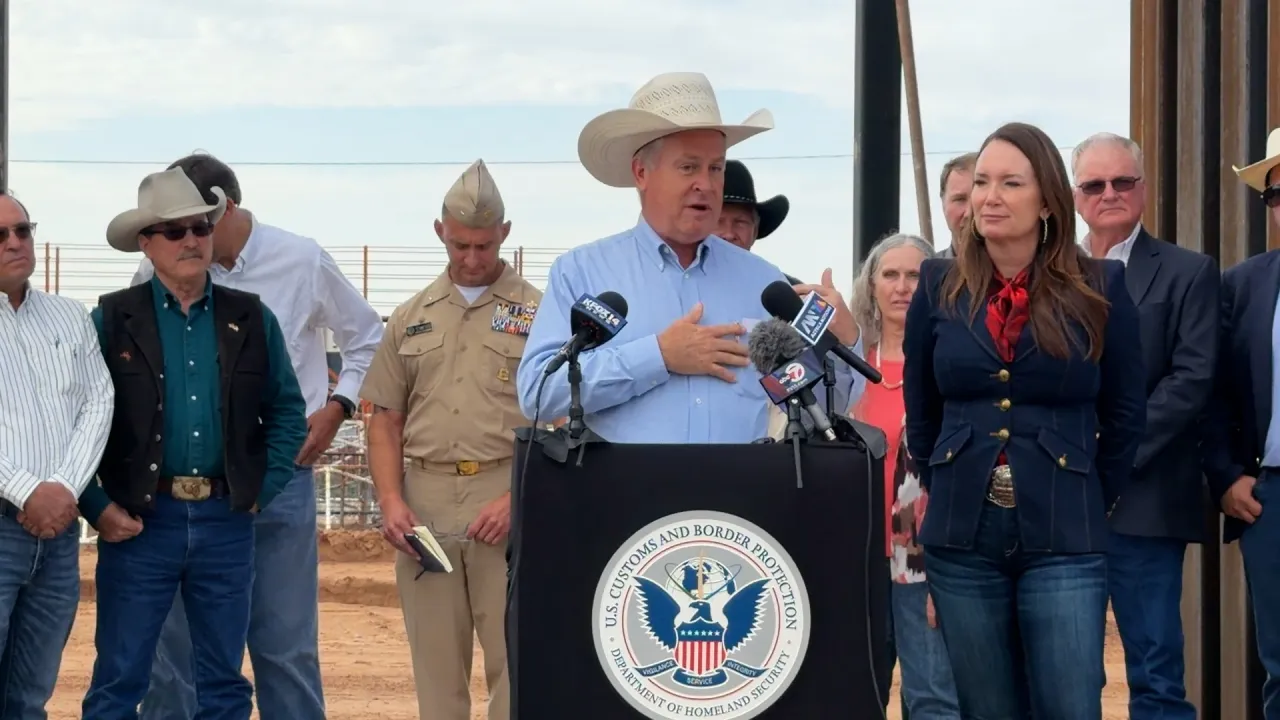
New Mexico Agriculture Secretary Jeff Witte said the cattle industry depends on shared infrastructure and coordination between Mexico and the United States. He credited federal, state and industry partners with bringing the port closer to reopening.
New Mexico State Veterinarian Dr. Sammy Hollick said state and federal officials have strengthened cattle traceability, treatment, inspection and security. She said those measures give her confidence in the cattle entering from Mexico, even as the state adapts its response to new screwworm detections.
Rollins also mentioned that the agency has not reached eradication, and the newly confirmed Grant County case underscores the continuing threat.
“We are not yet at eradication, so I want to make sure everyone understands that. We have two active cases. That may go up a case or two; it may go up a little bit more. But we are so proud of the fact that we only have two active cases in the U.S. and only 48 confirmed cases, compared to 90,000 cases in America in 1972.”